Fifteen centuries earlier, Israel had no homes. They had walked out of Egypt into the wilderness — not sand dunes, but hard open range: rock, scrub, and dry riverbeds where a shepherd could keep a few flocks alive and a whole nation could not last a month. They slept in tents and leafy lean-tos. The water was never enough. For forty years God was their well and their roof — He gave them water out of a rock and led them by a pillar of fire at night. When they finally settled in the land, God told them to camp out in leafy huts for one week every autumn so they would never forget: everything we had, God gave.
🖼️ See it: the wilderness, and the rock He struck
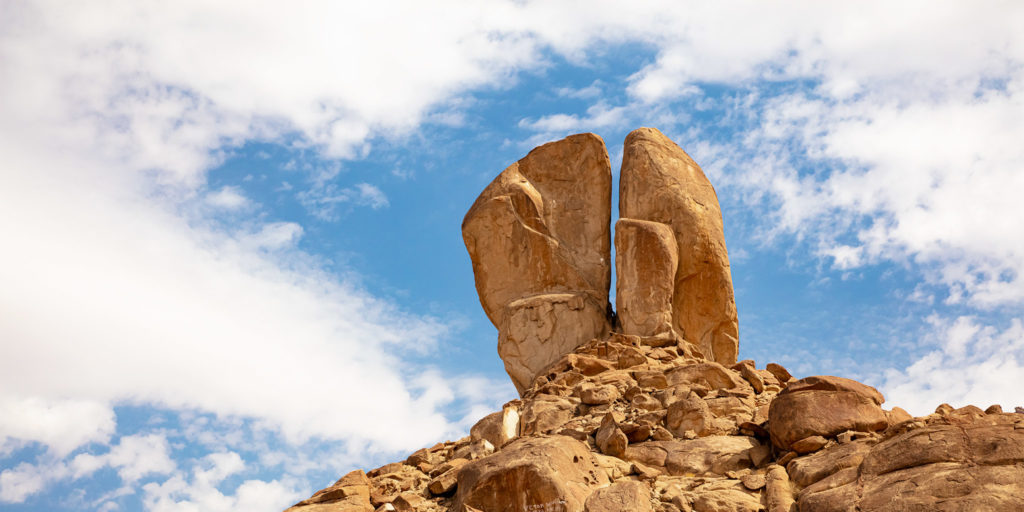
🏕 Not a sandy desert — what “wilderness” actually was
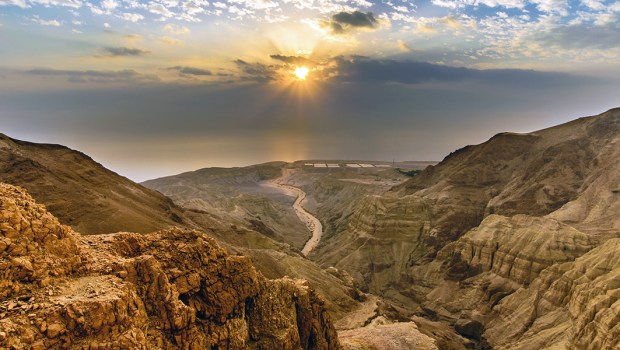
Picture the Exodus and most of us picture the Sahara: endless sand, nothing alive. That is not the word the Bible uses. The Hebrew is midbar (מִדְבָּר), and it most likely comes from a root meaning to drive — as in driving flocks. A midbar is the open range you drive livestock out to: the rough country past the last farm. Rocky ridges, thin scrub, gravel flats, dry riverbeds that flood in a storm, a spring here and there. Semi-arid grazing land, not a sand sea.
The Bible assumes this. Joel calls them “the pastures of the midbar” and says they turn green (Joel 2:22; also Psalm 65:12). Moses is out pasturing sheep in the midbar when he meets the burning bush (Exodus 3:1) — you cannot graze a flock on bare sand. And Israel left Egypt with “a very great deal of livestock” (Exodus 12:38) and still had herds forty years later. Those animals ate something.
So was it harmless? No. Moses calls it “the great and terrible wilderness, with fiery serpents and scorpions, a thirsty ground where there was no water” (Deuteronomy 8:15), and the people complain it grows no grain, figs, vines, or pomegranates (Numbers 20:5). The Sinai and the Negev get roughly one to eight inches of rain in a whole year. Bedouin shepherds have survived there for thousands of years.
And that is the point — a sharper one than “sand.” The land could feed a few families with flocks. It could never feed a nation. The miracle is not that God made food appear where nothing lives. It is that God fed a whole people in a place that has only ever fed households — and did it for forty years. The feast they are keeping in John 7 is the annual reminder.
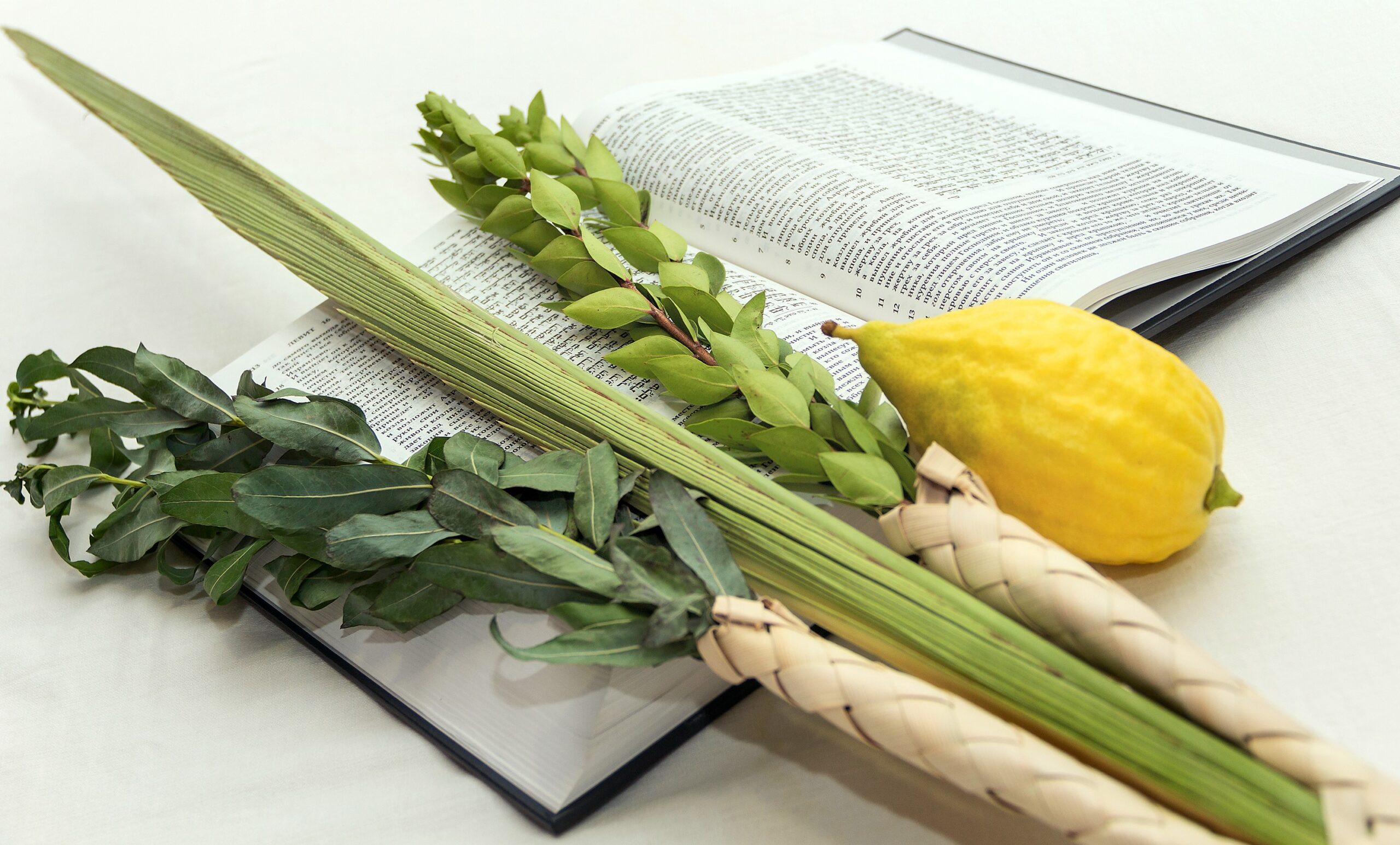
One more fix: they were not shelterless. They had tents and booths. That is the whole point of this festival — “you shall live in booths … so that your generations may know that I made the sons of Israel live in booths when I brought them out of Egypt” (Leviticus 23:42–43). Sukkot does not celebrate having no roof. It celebrates having a flimsy roof and being kept alive anyway.
A caution you will hear a lot: some popular teachers link midbar to davar (“word”) and call the wilderness “the place where God speaks.” It preaches beautifully, but it is a play on words, not the accepted origin of the term. Most lexicons trace midbar to the “drive the flocks” sense. Enjoy the illustration; do not teach it as the definition.
🖼️ See it: the booth they slept in

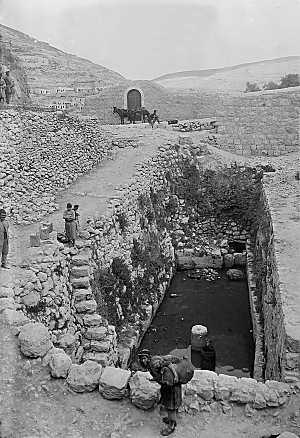
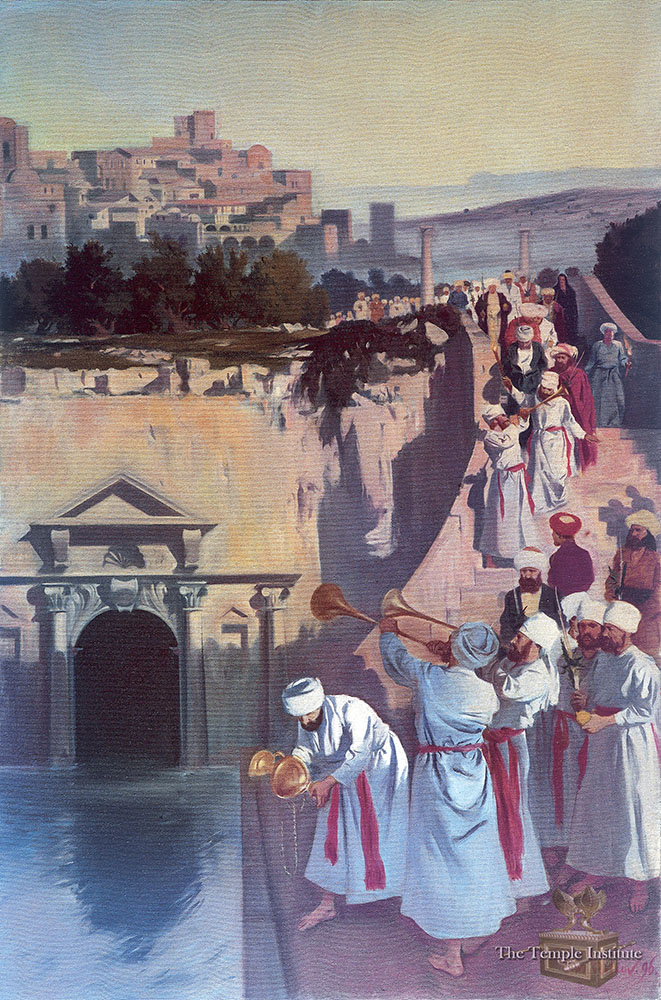
By Jesus’ day the festival had grown two beautiful habits. Every morning a priest carried a golden pitcher of water up from the Pool of Siloam and poured it out at the altar while the crowds sang, “with joy you will draw water from the wells of salvation” — a prayer for winter rain and for the day God would pour out His Spirit. And every night, giant lampstands lit the temple courts so brightly the rabbis said all Jerusalem glowed. Water and light, water and light, all week long — a whole city acting out one prayer: God, be our water and our light again.