Event 36 — The Great Light in Galilee
Turned away in Nazareth, Jesus settles in a lakeside town — and Matthew sees a 700-year-old promise come true: the brightest dawn rising over the region that had sat longest in the dark.
The brightest dawn over the darkest place
Rejected in His hometown, Jesus makes lakeside Capernaum His base — and Matthew tells us why it matters: it fulfills Isaiah’s promise that “a great Light” would dawn in “Galilee of the Gentiles.” This was no accident of geography. The territory of Zebulun and Naphtali, around the Sea of Galilee, had been the first part of Israel overrun and carried into exile by Assyria centuries earlier — the region that had sat longest “in darkness and the shadow of death.” And that is exactly where God chose His Light to rise first. The pattern we have watched since the manger holds: God brings His brightest dawn to the darkest, most overlooked corner. From this small fishing town, the light of the kingdom begins to spread.
The text
Underlined words (like great Light) link down to their original-language card in Word secrets below.
13And leaving Nazareth, He came and settled in Capernaum, which is by the sea, in the region of Zebulun and Naphtali. 14This was to fulfill what was spoken through Isaiah the prophet: 15“The land of Zebulun and the land of Naphtali, by the way of the sea, beyond the Jordan, Galilee of the Gentiles— 16the people who were sitting in darkness saw a great Light, and those who were sitting in the land and shadow of death, upon them a Light dawned.”
Matthew 4:13–16 (NASB95)📖 Read it in context
Read it on Bible Gateway (NASB 1995). Matthew is quoting Isaiah 9:1–2 — and that prophecy keeps going, straight into the famous words, “For a child will be born to us… Prince of Peace” (Isaiah 9:6–7). The Light is the promised King.
What the original words mean
Five words that make a relocation a fulfillment.
Not a passing visit but a home. Earlier Jesus had stayed in Capernaum “a few days” (John 2:12); now, after Nazareth’s rejection, He makes it His base of operations. The other Gospels will call it “His own city.” The rejected One puts down roots exactly where the prophecy said the Light would shine.
↑ Back to the passageGalilee was a mixed region, surrounded by Gentile peoples and looked down on by Judeans as second-rate. Matthew, writing to Jews, highlights the phrase on purpose: the Messiah’s light dawns first in the place nearest the nations — an early hint that this good news is headed for the whole world, not Israel alone.
↑ Back to the passageIn Isaiah the “great Light” is the coming Davidic King who ends the darkness of oppression. Matthew identifies that Light with Jesus — the same claim John makes (“I am the Light of the world,” John 8:12). Where Jesus goes, dawn breaks; His presence itself is the light Israel had waited for in the dark.
↑ Back to the passageThe same haunting phrase as “the valley of the shadow of death” in Psalm 23. It pictures a people living under a long, cold dusk — conquest, exile, hopelessness. Into that very gloom, “upon them a Light dawned.” The gospel does not wait for people to climb into the light; the Light comes down into the dark where they sit.
↑ Back to the passageThe word for a sunrise — the same root as the “Sunrise from on high” old Zechariah sang about at John’s birth (Luke 1:78). After a long night, the sun does not strain to rise; it simply comes. So with Jesus: the dawn of God’s kingdom breaks over Galilee as surely as morning, and the darkness cannot stop it.
↑ Back to the passageWhere the light chose to rise
Capernaum sat in the old territory of Zebulun and Naphtali, around the Sea of Galilee — the very lands first swept into Assyrian exile. The Light dawns where the darkness had fallen first and deepest.
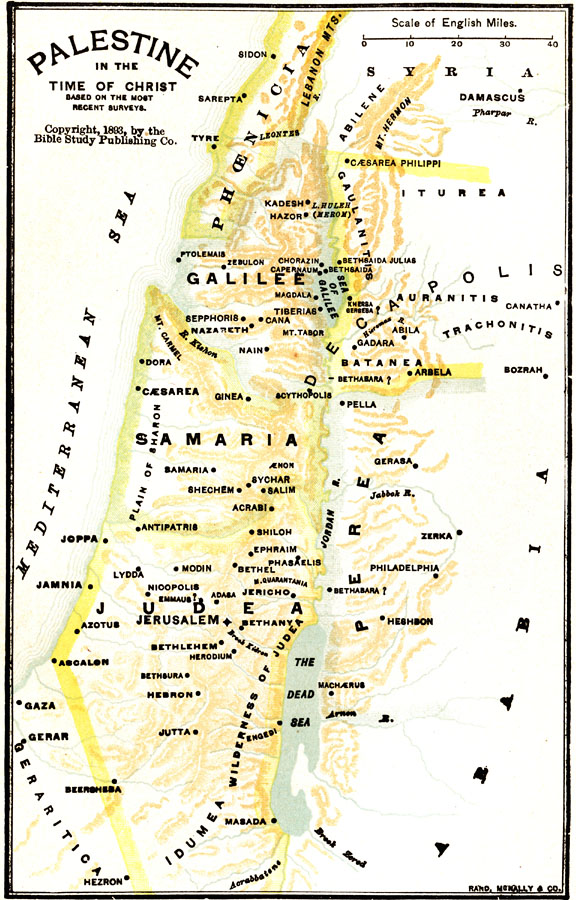
🏺 Zebulun and Naphtali — the lands that sat longest in the dark
Isaiah’s prophecy is pointed. Centuries before Jesus, the Assyrian empire began dismantling the northern kingdom, and Zebulun and Naphtali — the territory around the Sea of Galilee — were among the first carried into exile (2 Kings 15:29, c. 733 B.C.). They had been the first to taste the “darkness” of conquest. Isaiah promised that this same region, first into the gloom, would be first to see the great Light. By the first century, Galilee was still the “backwater” in Judean eyes — mixed, northern, unimpressive. That God planted His Messiah’s ministry there, rather than in proud Jerusalem, is the prophecy coming true to the letter: the dawn rises where the night was longest.
📜 The Light is a Person — and a King
The verse Matthew quotes does not stop at sunrise. Isaiah 9 runs straight on: “For a child will be born to us, a son will be given to us… and His name will be called Wonderful Counselor, Mighty God, Eternal Father, Prince of Peace. There will be no end to the increase of His government… on the throne of David” (Isaiah 9:6–7). The “great Light” is not an idea or a movement but a King — the child of Bethlehem grown up and now beginning His reign. John’s Gospel says the same thing from another angle: “In Him was life, and the life was the Light of men… the Light shines in the darkness, and the darkness did not overpower it” (John 1:4–5). To welcome Jesus is to step out of the shadow of death into the dawn.
How it ties to the rest of Scripture
| Passage | Connection |
|---|---|
| Isaiah 9:1–7 | The great Light, dawning in Galilee — and the child who is “Prince of Peace” on David’s throne. |
| 2 Kings 15:29 | Zebulun and Naphtali carried into Assyrian exile — the darkness Isaiah names. |
| Luke 1:78–79 | The “Sunrise from on high” shining on those in darkness — the same dawn, foretold at John’s birth. |
| John 8:12 | “I am the Light of the world” — Jesus naming Himself the Light Isaiah saw. |
Resources to explore
Play the video here, then dig into the text and its background.
🎬 Watch & listen
- Video: BibleProject — Matthew 1–13Overview with study notes and downloads.
- Podcast: An Intro to Reading the GospelsHow the Gospels present Jesus as a real figure in history.
📖 Study tools
- Matthew 4:16 interlinear + Strong’sSee “a great Light… dawned” in the Greek.
- Full passage (Matthew 4:13–16, NASB95)Read it on Bible Gateway.
🔗 Cross-reading
- Isaiah 9:1–7The great light and the child born to reign.
- John 1:1–9The Light that shines in the darkness.
Discussion questions
- Matthew turns a simple change of address into a fulfilled prophecy. What does that habit — seeing Jesus fulfill Scripture at every step — teach about how the Old and New Testaments fit together?
- God chose “Galilee of the Gentiles,” the region first into exile-darkness, for the Light to dawn first. Why might He bring His brightest dawn to the darkest, most overlooked place?
- The Light “dawned” on people “sitting” in darkness — not climbing toward the light, but seated in it. How does that shape the way we understand grace?
- Isaiah’s “great Light” turns out to be a Person and a King. What changes when we realize the light we long for is not a thing but Christ Himself?
- Only after all that does the question reach us: the rejected Jesus settled and shone anyway. Where might God be wanting His light to rise through us in places others have written off?