Event 25 — Brief Stay in Capernaum
One short travel note — easy to skim past — quietly marks a turning point: where the Son of God chooses to set up the headquarters of His mission.
A hinge verse: down to the lakeside base
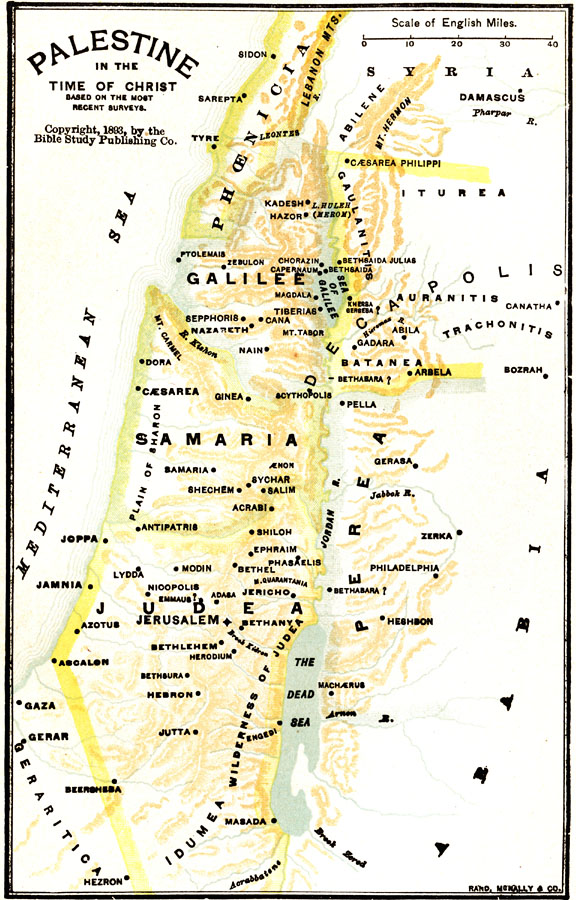
After the wedding at Cana, Jesus goes “down” to Capernaum — literally down, from the Galilean hills to the shore of the Sea of Galilee, far below sea level. He travels with both His natural family (His mother and brothers) and His new disciple-family, and they stay only a few days before He heads up to Jerusalem for Passover. It reads like a simple itinerary, but it marks a real shift: Jesus is moving His base of operations from the obscure hill village of Nazareth to Capernaum, a busy lakeside crossroads that the other Gospels will call “His own city.” From this small fishing town He will launch much of His Galilean ministry.
The text
Underlined words (like Capernaum) link down to their original-language card in Word secrets below.
12After this He went down to Capernaum, He and His mother and His brothers and His disciples; and they stayed there a few days.
John 2:12 (NASB95)📖 Read it in context
Read it on Bible Gateway (NASB 1995). The other Gospels fill in the move: “leaving Nazareth, He came and settled in Capernaum, which is by the sea” (Matthew 4:13), and they later call it “His own city” (Matthew 9:1).
What the original words mean
Four small details that fill out the move.
Not a figure of speech — it’s geography. Nazareth and Cana sit up in the Galilean hills; the Sea of Galilee lies about 700 feet below sea level. To reach Capernaum on the shore, you literally go down. John, an eyewitness from this region, records the lay of the land exactly.
↑ Back to the passageA fishing town on the northwest shore of the lake, sitting on a major trade road with a customs post and a synagogue. Busy, mixed, working-class — exactly the kind of crossroads where a teacher could reach all sorts of people. Jesus makes it His ministry headquarters; much of the action of the Gospels happens here or nearby.
↑ Back to the passageJesus had brothers — named elsewhere as James, Joses, Judas, and Simon (Mark 6:3). At this point they travel with Him, but they do not yet believe in Him (John 7:5). It’s a tender, honest detail: even Jesus’ own household had to come to faith, and at least two of these brothers later would — James and Jude, who wrote letters in our New Testament.
↑ Back to the passageThe same “abide” word John loves — here just meaning they lodged there a short while. It’s a pause for breath in the narrative: a few quiet days at the new base before Jesus goes up to Jerusalem for the Passover and the events of the next lessons.
↑ Back to the passageWhy Capernaum, by the sea
Capernaum sat on the northwest shore of the Sea of Galilee, on the trade road that ran through the region — a natural hub for reaching fishermen, tax collectors, travelers, and townsfolk alike.
🏺 A fishing town and a strategic crossroads
Capernaum’s economy ran on the lake — fishing, boats, fish-salting — and on the road. A customs and tax post stood here (this is where Jesus would later call Matthew the tax collector from his booth), along with a synagogue where He would teach. Sitting on the route that linked the regions, the town saw a constant flow of ordinary people: fishermen, traders, a Roman officer or two. For a mission aimed at the poor and the overlooked, it was an ideal base — far more so than tucked-away Nazareth. The choice of headquarters is itself in keeping with Jesus’ whole approach: He sets up among working people, at the busy edge of things.
📜 From rejected Nazareth to “Galilee of the nations”
Matthew explains the move with a prophecy. After Nazareth’s coldness toward Him, Jesus “settled in Capernaum… in the region of Zebulun and Naphtali — to fulfill what was spoken through Isaiah: ‘the people who were sitting in darkness saw a great light’” (Matthew 4:13–16, quoting Isaiah 9:1–2). Galilee was a mixed region, looked down on by Judeans — “Galilee of the Gentiles.” That God’s light would dawn there first, not in Jerusalem, fits the pattern we’ve seen since the manger: the King comes to the margins.
How it ties to the rest of Scripture
| Passage | Connection |
|---|---|
| Matthew 4:13–16 | Jesus settles in Capernaum — the move that fulfills Isaiah’s “great light” in Galilee. |
| Isaiah 9:1–2 | Light dawning on Galilee “of the nations” — the prophecy behind the move. |
| Mark 6:3 | Jesus’ brothers named — the family that traveled with Him here. |
| Matthew 11:23–24 | Later, Jesus warns Capernaum — great privilege carries great responsibility. |
Resources to explore
Play the video here, then dig into the text and its background.
🎬 Watch & listen
- Video: BibleProject — John 1–12Overview with study notes and downloads.
- Podcast: Jesus’ Identity in John’s GospelHow John portrays who Jesus is.
📖 Study tools
- John 2:12 interlinear + Strong’sSee “went down… Capernaum” in the Greek.
- Full verse (John 2:12, NASB95)Read it on Bible Gateway.
🔗 Cross-reading
- Matthew 4:12–17The move to Capernaum and the dawning light.
- Isaiah 9:1–7The great light and the child on David’s throne.
Discussion questions
- Jesus makes a busy, working-class lakeside town His base rather than the religious capital. What does that choice of headquarters say about the heart of His mission?
- Matthew links the move to Isaiah’s “great light” dawning in Galilee of the nations. Why might it matter that the light rose first at the margins rather than in Jerusalem?
- His mother and brothers travel with Him, yet His brothers don’t yet believe. What encouragement is there in knowing even Jesus’ family came to faith over time?
- John, an eyewitness, records small true details like “went down” to the lake. How does the everyday accuracy of the Gospels strengthen our confidence in them?
- Only after all that does the question reach us: a few quiet days at the base precede a big trip to Jerusalem. What place do ordinary, restful days have between seasons of work?