Events 92 & 93, Lesson 72 — Setting His Face Toward Jerusalem
The moment everything turns. Jesus stops moving around Galilee and points Himself, on purpose, at Jerusalem — and the very first village on the road slams its door in His face.
The long walk to the cross begins here
Up to now, Jesus has mostly circled the Sea of Galilee — teaching, healing, training the Twelve. Luke 9:51 is the turn. From this verse on, Jesus is walking toward Jerusalem and the cross, and He knows it. The first thing that happens on that road is rejection — a Samaritan village won’t take Him in. How Jesus answers that rejection (with mercy, not fire) shows us the whole heart of the journey He just started.
The text
Underlined words (like ascension) link down to their original-language card in Word secrets below.
51When the days were approaching for His ascension, He was determined to go to Jerusalem; 52and He sent messengers on ahead of Him, and they went and entered a village of the Samaritans to make arrangements for Him. 53But they did not receive Him, because He was traveling toward Jerusalem. 54When His disciples James and John saw this, they said, “Lord, do You want us to command fire to come down from heaven and consume them?” 55But He turned and rebuked them, [and said, “You do not know what kind of spirit you are of; 56for the Son of Man did not come to destroy men’s lives, but to save them.”] And they went on to another village.
Luke 9:51–56 (NASB95)📖 A note on the brackets & the parallel passages
The brackets in verses 55–56 are in the NASB itself. The oldest Greek copies of Luke end verse 55 simply with “He turned and rebuked them,” while some later copies add the fuller saying about not coming to destroy but to save. Translators keep the words but flag them so you know the manuscripts differ. Either way, the point of the scene is the same: Jesus shuts down the idea of fire.
This study folds in event 92 (the departure for Jerusalem) and event 93 (the Samaritan rejection) from our harmony. Matthew, Mark, and John each note the same turn south — Matthew 19:1–2, Mark 10:1, and John 7:10 — but only Luke gives us the Samaritan village. Luke then spends the next ten chapters (9:51–19:27) on this single journey, so this verse is the doorway into the largest section of his Gospel.
Read the whole passage on Bible Gateway (NASB 1995).
👀 Read it like a detective — observe before you interpret
Before asking what it means, slow down and notice what the text actually says:
- Repetition: “Jerusalem” appears twice in three verses — the destination is driving everything. “Village” bookends the scene: a village rejects Him, and He simply moves on to “another village.”
- Cause and effect: the conjunction in verse 53 — they did not receive Him because He was traveling toward Jerusalem. The rejection has a stated reason.
- Sharp contrast: the disciples want to destroy; the Son of Man came to save (v.56).
- A vivid verb: “set His face” (behind “was determined”) — fixed, deliberate resolve, not a casual decision.
- The disciples’ question: “Lord, do You want us to command fire…?” — they assume Jesus would approve; His answer overturns the assumption.
What the original words mean
Luke wrote in Greek. A few of his word choices carry weight that an English translation can’t fully show. Here are the four that unlock the scene.
NASB says “ascension.” This exact word shows up only here in the whole New Testament. It doesn’t just mean the cross — it means the entire arc of being “taken up”: crucifixion, resurrection, and going back to the Father. Luke is telling us the clock has started on Jesus’ whole departure.
↑ Back to the passageNASB smooths this to “He was determined to go,” but the Greek is a vivid Hebrew idiom: He set His face. It echoes Isaiah 50:7 — “I have set My face like flint” — the Servant who walks into suffering without flinching. Think of someone locking their eyes on a finish line and refusing to look away.
↑ Back to the passageNot foreigners exactly, and not fellow Jews either — distant cousins with a 700-year-old family feud (see the 🏺 panel below). For a Samaritan village to refuse a Jewish pilgrim headed to Jerusalem was a pointed insult: they worshiped on a different mountain and rejected Jerusalem’s temple.
↑ Back to the passageThis is a strong word. It’s the same verb Luke uses when Jesus rebukes demons and the storm. Here, though, the sharp correction lands not on the Samaritans who rejected Him — but on His own disciples for wanting revenge.
↑ Back to the passage🔤 Going deeper: “messengers” and the Elijah echo
The word for “messengers” in verse 52 is angelous (ἀγγέλους) — the same word usually translated “angels.” It simply means “sent ones.” Luke likes this forerunner picture: someone goes ahead to prepare the way, just as John the Baptist did (compare Malachi 3:1).
James and John’s request to call down fire isn’t random. They’re standing in Samaritan country, and the prophet Elijah once called fire from heaven on soldiers right here in the northern kingdom (2 Kings 1:10–12). Some early manuscripts even add “as Elijah did” to their question. Jesus — who was just compared to Elijah on the Mount of Transfiguration a few verses earlier — refuses to play Elijah’s role of judgment. He came to save, not to scorch. (The brothers’ nickname fits: Jesus called James and John “Sons of Thunder,” Mark 3:17.)
Where this sits in Luke
Luke’s Gospel has three big movements. Verse 9:51 opens the middle one — the longest stretch of the book, and almost all of it is material the other Gospels don’t record. This one lesson is the doorway into roughly ten chapters of teaching on the road.
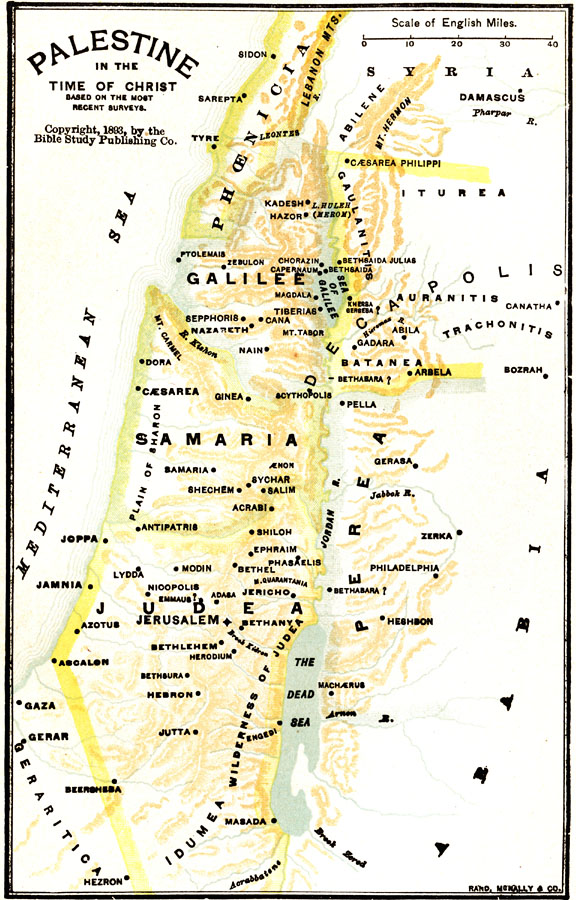
On the map (first century): the road through Samaria

🏺 Why Jews and Samaritans didn’t get along
The bad blood went back about 700 years. When Assyria conquered the northern kingdom of Israel in 722 BC (2 Kings 17:24–41), it resettled the area with mixed peoples. Their descendants, the Samaritans, kept a version of the faith but built their own temple on Mount Gerizim and accepted only the first five books of the Bible. To Jerusalem-centered Jews, that made them half-breed heretics; to Samaritans, the Jews were worshiping in the wrong place.
By Jesus’ day the feud was raw and sometimes violent. Honor and hospitality ran the ancient world — refusing to receive a traveler was a public slap. A Samaritan village turning away a pilgrim precisely because He was heading to Jerusalem was an insult aimed at the temple itself. That’s the charged air James and John are breathing when they reach for fire.
🗺️ The road south: three ways from Galilee to Jerusalem
A pilgrim leaving Galilee for Jerusalem had three real options, and the choice was about safety as much as distance:
- Straight through Samaria (central route) — the shortest, about three days on foot, but it ran right through hostile Samaritan towns. Many Jews avoided it.
- Down the Jordan Valley through Perea (eastern route) — longer, five to seven days, crossing the river to skirt Samaria, then crossing back near Jericho. Safer, because of the Jewish communities along the way.
- The coastal plain (western route) — the longest way of all, hugging the Mediterranean.
Luke shows Jesus deliberately taking the Samaria road — the short, risky one — and meeting exactly the rejection that road was famous for. The first-century historian Josephus records real bloodshed between Galilean pilgrims and Samaritans on this very route (Antiquities 20.118–136). Map and details: 3 Pilgrimage Paths from Galilee to Jerusalem (Biblical Archaeology Society).
Reading the Gospel well — the key question: in every Gospel scene, ask first, “What is this episode telling us about Jesus?” Here the answer is sharp: insulted and rejected, He refuses to call down judgment — “the Son of Man did not come to destroy… but to save.” He is the Servant who has set His face to suffer, not the fire-bringing warrior His own men expected. And notice where Luke places it: this verse opens his ten-chapter “journey to Jerusalem” (9:51–19:27), right after Moses and Elijah spoke with Jesus about His coming “departure” — and it flows straight into the cost of following Him (9:57–62, Event 94). The road that begins with rejected mercy ends at a cross of forgiving mercy.
How it ties to the rest of Scripture
| Passage | Connection |
|---|---|
| Isaiah 50:4–7 | The Servant “sets His face like flint” to endure suffering — the exact picture behind Luke 9:51. |
| 2 Kings 1:10–12 | Elijah calls down fire on his enemies’ messengers — the script James and John want to follow, and the one Jesus refuses. |
| Luke 9:28–36 | Just verses earlier, Moses and Elijah speak with Jesus about His “departure” (exodus). Now that departure officially begins. |
| Luke 9:57–62 | The very next scene: what it costs to follow Jesus on this road. Rejection in the village flows straight into a call to total commitment. |
| Luke 23:34 | At the end of the road, on the cross, Jesus prays “Father, forgive them.” The mercy He teaches here is the mercy He dies with. |
| Acts 8:4–25 | The same Samaritan villages that reject Jesus here later welcome the gospel — and John (who wanted fire) returns to pray for them instead. |
📜 Outside the Bible: Josephus on the Samaria road
Writing late in the first century, the Jewish historian Flavius Josephus describes how Galilean pilgrims traveling through Samaria to the festivals were attacked near a border village, sparking a violent cycle of revenge (Antiquities of the Jews 20.118–136; see also Jewish War 2.232–246). It confirms what Luke assumes his readers already know: this route was a tinderbox, and a cold welcome there was no surprise. The shock of the story isn’t that the Samaritans rejected Jesus — it’s that He wouldn’t let His disciples retaliate.
The Interpretive Journey
Good study doesn’t stop at “what it meant back then” or jump straight to “what it means to me.” It travels the distance carefully — from the original audience, across the differences, to the timeless principle, and only then home to us. Here is that journey for this passage.
What it meant to the first hearers
What did the text mean to the biblical audience?First-century Jews felt the charge in every detail: the Galilee-to-Jerusalem road ran through hostile Samaria; “set your face” was the language of Isaiah’s suffering Servant; and everyone knew Elijah had once called fire from heaven in this very region (2 Kings 1). Many were waiting for a fire-and-judgment Messiah. So when James and John reach for fire on a village that snubbed their Lord, they think they are being faithful — and Jesus’ rebuke of His own men, rather than the village, would have landed as a shock.
Measure the differences between them and us
What separates the biblical situation from ours?The river is wide. We don’t carry a 700-year Jew–Samaritan blood feud, don’t live by an honor-and-shame code where an insult demands payback, and don’t expect a warrior-Messiah who scorches enemies. We also don’t instinctively read Elijah’s fire as a model to copy. And we stand on the far side of the cross, already knowing where this road leads. Naming these gaps keeps us from misreading the scene as merely “be nice” — it is about what kind of King Jesus is.
The timeless theological principle
What truth crosses over from then to now?Because Jesus came to save and not to destroy, His followers answer rejection with mercy rather than retaliation, and leave judgment to God. To walk His road is to absorb insult with patient love, not to call down fire on those who refuse us.
How it fits the rest of Scripture
Does this principle hold across the whole Bible?It fits hand in glove. “Love your enemies and pray for those who persecute you” (Matthew 5:44); “Never pay back evil for evil… leave room for the wrath of God” (Romans 12:17–21); and Jesus’ own dying prayer, “Father, forgive them” (Luke 23:34). The proof is in the sequel: the very Samaritan region rejected here later welcomes the gospel in Acts 8 — with John, who wanted fire, returning to pray for them instead.
How we live it out today
How should we apply it now?Ask where you are tempted to “call down fire” — to wish harm, retaliate, or write someone off when they reject you, your faith, or your people. Jesus redirects the impulse: bless instead of curse, pray instead of punish, and simply move on to “another village,” trusting God with the outcome. Make it concrete: name the person or group you’re tempted to wish fire on, and choose one merciful next step toward them this week.
A thinking tool: inversion
To see what kind of Messiah Jesus is, watch what He refuses to do
“Invert, always invert” — when something is hard to see head-on, turn it around. To grasp the kind of Messiah Jesus is, look at the role He declines. James and John aren’t being random: they’re standing in Samaria, the very region where the prophet Elijah once called fire from heaven on his enemies (2 Kings 1), and many in their day were waiting for a warrior-Messiah who would come in fire to judge Israel’s enemies. The disciples reach for exactly the script their world expected.
This is the first step of the road to Jerusalem, and Jesus sets its tone: He is not the conquering judge His followers were hoping for, but the Servant who has “set His face like flint” to be rejected and to die. Luke even lets us see the harvest such patience protects — these same Samaritan villages later run to receive the gospel in Acts 8, with John himself among them.
The lesson sits right in the contrast: the disciples wanted Elijah’s fire; Jesus shows them a Messiah who saves by being rejected, not by destroying those who reject Him.
Resources to explore
Play the video right here, then use the links below to dig deeper into the places and the original text.
🎬 Watch & listen
- Video: BibleProject — Luke 10–24 (YouTube)The “journey to Jerusalem” this lesson opens, and how Jesus reigns by suffering. ~8 min.
- Video: BibleProject — Luke 1–9 (YouTube)A quick recap of everything leading up to the turn south. ~8 min.
- Podcast: Jesus, Rebels & Resurrection (Luke 9–24)BibleProject discusses the travel-to-Jerusalem section this lesson opens.
📍 Maps & places
- Zoom in: Palestine in the time of ChristExplore the full first-century map — W. W. Smith (1911), public domain.
- Zoom in: roads, time of ChristTrace the actual routes from Galilee through Samaria to Jerusalem.
- Why the Samaria road was the shortcutBiblical Archaeology Society — the three pilgrimage routes explained.
📖 Study tools
- Luke 9:51 interlinear + Strong’sGreek word-by-word — see “ascension” and “set His face” for yourself.
- Full passage, Luke 9:51–56 (NASB95)Read the whole text on Bible Gateway.
- Elijah’s fire, 2 Kings 1 (NASB95)The Old Testament scene James and John were thinking of.
Discussion questions
- Luke says Jesus “set His face” toward Jerusalem — echoing the Servant of Isaiah 50:7 who set his face “like flint” to suffer. What does that picture say about how a first-century reader was meant to understand His journey to Jerusalem?
- Galilean pilgrims often crossed the Jordan to avoid hostile Samaria. Why might Luke want us to notice that Jesus deliberately took the road through it — and met exactly the rejection it was known for?
- James and John reached for “fire from heaven” because they stood in Samaria, remembering Elijah (2 Kings 1) and expecting a Messiah who would judge God’s enemies. What does Jesus’ refusal reveal about the kind of Messiah He had come to be?
- Jesus rebuked His own disciples, not the village that shut Him out. In an honor-and-shame world where an insult demanded a response, how would that have struck the Twelve?
- Jews and Samaritans had despised one another for some seven hundred years — yet these same villages later welcomed the gospel (Acts 8). How should that reshape the way Jesus’ people see those who reject them — then and now?